The Tea Skin on My Mind
Acronyms and terms used:
U.S. — United States, the country where I studied and worked for many years before returning to India.
LinkedIn — A professional networking site where everyone appears employed, polished, visionary, and recently photographed under excellent lighting.
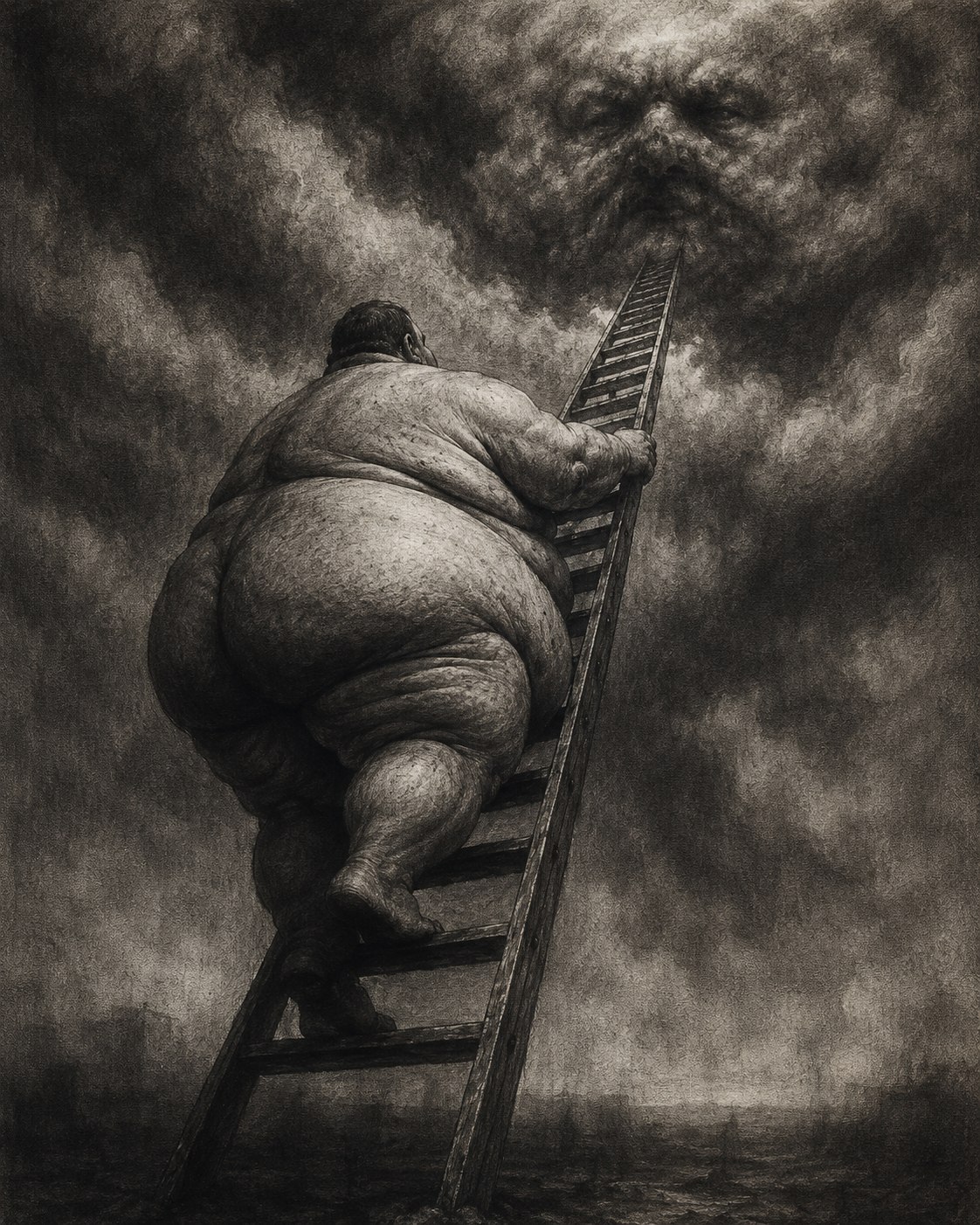
The tea had grown skin again.
That thin beige film had formed on top of the cup, floating there with the dead seriousness of a government seal. It happens when milk tea is abandoned for too long. In my case, abandoned means fourteen minutes, two feet away from my own hand, while I stood in the kitchen and went missing inside my head.
This is not a dramatic disappearance. No detective is required. No neighbor says, “But he was such a quiet man.” I am still there, in a faded vest, in a room on the edges of Calcutta, with the kettle clicking like a tired clerk stamping one last file before lunch.
This is how my day begins.
Not with ambition.
Not with sunlight.
Not with some shining young man on the internet saying, “I wake up at five, drink warm water, write gratitude, and attack the day.” I do not attack the day. The day attacks me first, usually from behind, while I am looking for the tea strainer.
My day begins with the old knowledge that I am once again the manager, clerk, peon, landlord, tenant, unpaid watchman, and nervous accountant of my own skull. It is a badly maintained warehouse of thoughts. Nothing switches off. Nothing goes home. Nothing says, “Enough, dada. The office is closed.”
My mind does not rest.
It patrols.
Like a police inspector with digestion trouble.
It walks through the rooms inside me, tapping dusty files, reopening old cases, sniffing at ancient embarrassments. Why did I say that in 1997? Why did I not answer that email properly in 2009? Why did I come back to India with such noble foolishness, like the hero of a Bengali art film who does not get romance, money, peace, or even proper mosquito repellent?
And the worst part is not the thinking.
Thinking is respectable. Thinking wears spectacles. Thinking gets invited to seminars and sits beside bottled water.
This is not thinking.
This is a monkey with a degree.
It scratches. It worries. It calculates. It observes. It doubts. It revises. Then, when evidence changes, it changes its mind, which is supposed to be a virtue. In real social life, however, changing your mind is treated like making a rude noise in a lift. People admire certainty. India adores certainty. Certainty here arrives with folded arms, a loud voice, and the expression of a man who has mistaken his acidity for philosophy.
I say, “I don’t know,” and the room quietly lowers my price.
But “I don’t know” is a beautiful sentence. Clean. Small. Honest. A steel spoon.
Unfortunately, most people do not want a steel spoon. They want a decorated ladle of nonsense. Confident nonsense. Nonsense wearing a blazer. Nonsense with slides. Nonsense that begins with “Obviously” and then says something that would embarrass a goat with moderate education.
And I, defective in the profitable arts of life, keep observing.
Far more than I speak.
This creates problems.
If you observe too much and speak too little, people become suspicious. They think you are shy, arrogant, sad, strange, dangerous, or about to borrow money. Sometimes all five, depending on the quality of the sofa.
I watch faces. I watch pauses. I watch who interrupts whom. I watch who laughs half a second too late because status has reached the joke before intelligence. I watch the small sweaty theater of human importance: the uncle explaining global affairs with paan breath, the cousin pretending not to compare salaries, the neighbor saying “contacts are everything” as if he has personally discovered electricity.
A normal man hears conversation.
I hear plumbing.
Small pressure changes. Leaks. Clogs. A valve of envy opening behind the eye. A little burp of insecurity. A blockage made of caste, class, salary, English, father’s flat, imported deodorant, American-return status, failed marriage, and that great national sport: pretending to know what is happening.
This is not superiority.
Superiority would be comfortable. It would sit in the stomach like a large lunch and make small satisfied noises.
This is worse.
This is seeing too much and trusting yourself too little.
I observe like a detective and doubt like a schoolboy caught stealing guava.
My doubts have doubts now. One doubt says, “Maybe you are right.” Another says, “Convenient, isn’t it?” A third, from the back bench, says, “Have we considered that everyone else is normal and you are simply a decorative crack in the wall?”
So there I am. Fifty-one. Alone. Educated beyond usefulness. Emotionally tender in places I cannot show without causing civic disturbance. Carrying a quiet sense of not belonging the way some men carry a hernia: privately, awkwardly, adjusting it before sitting down.
Belonging is a strange word.
It sounds soft. Like a sweater.
But inside the body it is more like digestion. You do not notice it until it fails.
Other people enter rooms as if they are expected by the furniture. They sit. They merge. They make noises. They become part of the upholstery of society.
I enter and immediately feel like a foreign object in the intestine of the gathering.
The room tightens.
I tighten.
Some invisible social muscle says, “No, not this one.”
So I return to my bubble.
Please do not imagine a poetic bubble. No starlight. No violin. No blue glass dome with a thoughtful man looking at the moon. My bubble is more like a half-cleaned aquarium in which one depressed fish has read too many books, worked too many years with computers, lost too much faith in institutions, and now refuses both destiny and LinkedIn.
Inside this bubble I am safe from fools.
Not from myself.
That is the catch. It is like avoiding street food poisoning by eating something suspicious from your own fridge.
I spend a lot of time alone, and solitude is not automatically noble. Monks have given it very good publicity by looking calm near mountains. My solitude is not like that. Mine is one man reheating rice, ignoring messages, checking messages, regretting both, watching dust gather near the router, and having a philosophical crisis because the onion has sprouted a green tail in the corner of the kitchen.
Still, I prefer it.
People exhaust me.
Not all people. Some people are miracles. A few arrive like rain after a long power cut. But most social contact is a committee meeting between boredom and performance anxiety.
I get bored very fast. This is not always other people’s fault.
Sometimes it is entirely their fault.
There are people who say the same sentence nine times with the confidence of someone inventing oxygen. There are family gatherings where the same opinions are served again and again, like reheated luchi: oily, limp, and somehow still compulsory. There are tea-stall parliaments where a man who cannot manage his own scooter parking explains the world economy.
Boredom is not emptiness.
Boredom is pain without a wound.
A small insect chewing the wallpaper of consciousness.
And then, after all this observing, doubting, retreating, and drinking tea like a minor defeated official, the real work waits.
The work that matters.
That is when I become a hero of avoidance.
I can answer a useless message. I can rearrange folders. I can read about the diet of a medieval king. I can compare rice cooker wattage. I can mentally prosecute five people for imaginary crimes. But the one task that may actually change my life sits there like a dog with teeth.
Important work is not lazy.
It looks back.
It asks for a version of you that may not exist. It says, “Come here. Let us measure the distance between your talent and your fear.”
So I delay.
Not because I do not care.
Because I care too much.
That is the little joke nobody prints on motivational posters. The work that matters becomes radioactive. The email becomes a tiger. The blank page becomes a court summons. The proposal becomes a mirror. The website becomes a witness. Rent waits in the corner like a quiet gangster.
The brain is ancient. It was built to avoid immediate pain. It was not built to write a dignified proposal, fix a broken career, publish consistently, or rebuild self-respect while the ceiling fan ticks like an old bus conductor’s coin box.
So I procrastinate hardest on the work that matters most.
Then I punish myself.
Then I become too bruised to work.
Then I call it analysis.
Then I make tea.
Then the tea grows skin.
Then I feel judged by dairy chemistry.
This is a full system. Not a good system, but a system.
I also feel things more deeply than I show, which is another inconvenient habit in a culture where men are allowed emotion mainly during cricket, funerals, and patriotic shouting. Outside that, you must remain composed. Composed is a nice word. It often means slowly turning into a storage drum.
People think I am blunt. Cynical. Abrasive.
Fine.
That is easier than explaining that an old song can open a trapdoor inside me, that a small kindness can make me suspicious because I do not know where to keep it, that a tiny humiliation can sit in my chest for days like a wet sock behind the ribs.
The body remembers what the mouth files away.
There is neuroscience for this, but there is also simpler evidence: a middle-aged man alone in a hot Calcutta room, sweating through his vest, becoming suddenly furious because a cheap plastic clip broke at the exact moment his life already felt like a cheap plastic clip.
The nervous system is not a philosopher.
It is a goat tied in a thunderstorm.
It kicks, panics, stains the ground, and later some educated fool writes an essay around the hoof marks.
And yet, I still change my mind when evidence changes.
Even now.
Even tired, bitter, suspicious, and half-cooked by June humidity, I can still be dragged by evidence like a reluctant municipal cow across traffic. That may be the last small decency left in the machine. Not goodness. Goodness is too decorative. Decency is smaller and harder. It says: if the facts move, you move too, even if your ego makes a scraping sound.
But every changed belief leaves a little body behind.
Old politics. Old gods. Old ambitions. Old faith in institutions. Old faith in talent. Old faith in the idea that if a man is honest, careful, and competent, the world will eventually notice and provide a chair.
The world notices very little.
The world is busy selling coaching courses to fools, luxury flats beside drains, miracle diets, career hacks, and motivational wisdom from people whose main achievement is excellent lighting.
Meanwhile, outside my room, life continues.
People marry. Invest. Forward nonsense. Shout at drivers. Argue about prices. Buy mangoes. Lose umbrellas. Believe in destiny. Build reputations on wet cardboard. Sleep.
Somehow, they sleep.
Inside, I am still awake.
The tea has gone cold.
The skin on top wrinkles when I blow on it, like a tiny colonial magistrate disappointed by the natives.
I drink around it anyway.
Warm, bitter, faintly sweet, slightly disgusting.
A proper Calcutta morning.
Not noble.
Not tragic.
Just mine.